Concrete steps construction in Gilroy CA - a solid base and a finish with real grip

Front steps cracked, crumbling or pulling away from the porch? We build new concrete steps on a solid base with a finish that grips underfoot.

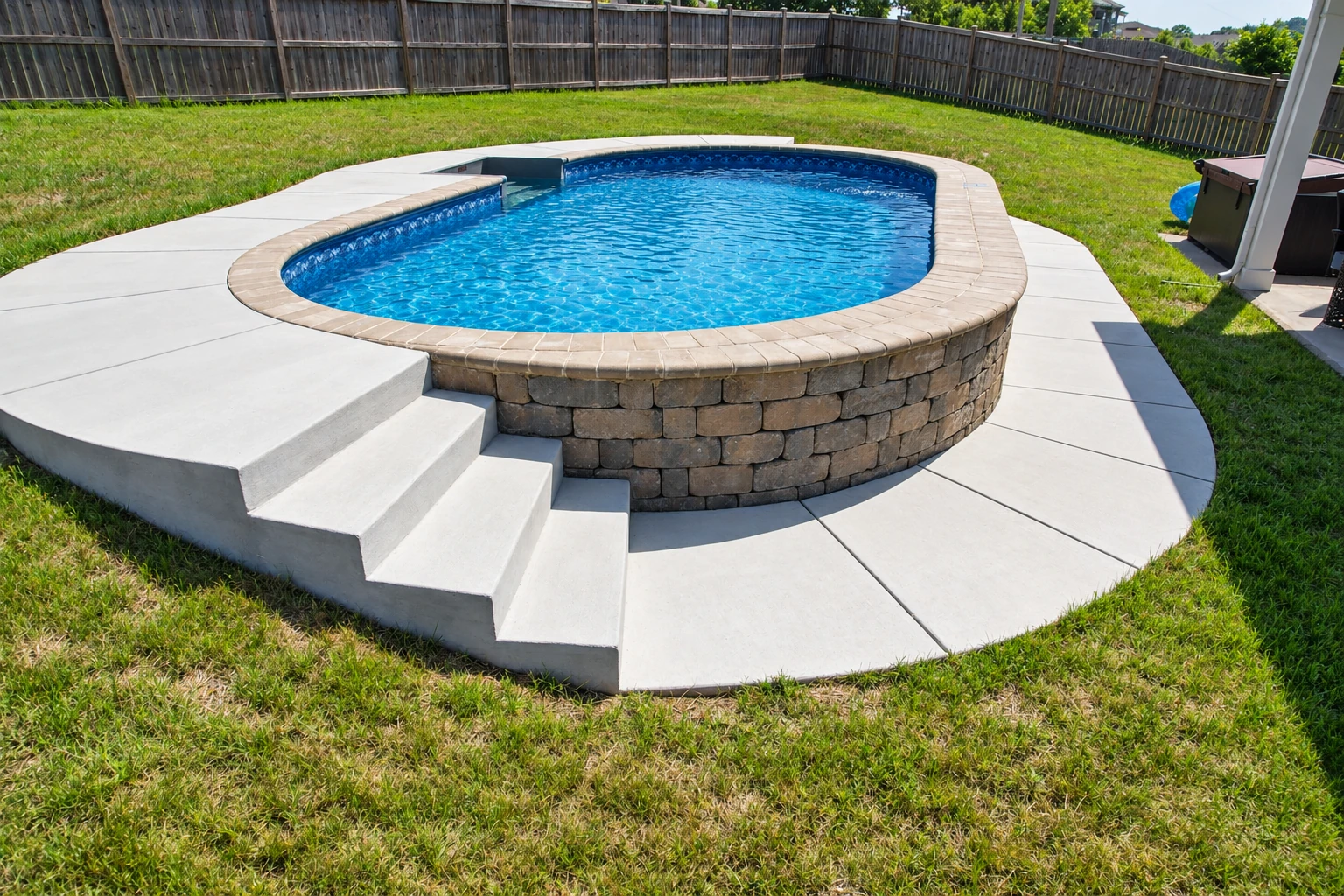
Concrete steps lead to a raised, rounded swimming pool surrounded by a pale concrete deck.

How are new concrete steps built in Gilroy?

Concrete steps construction in Gilroy means building a new set of steps at your door or porch, either poured in place or set as precast units. Each set rests on a base made for its spot, so the steps sit firm and give your feet good grip.

Most calls start with steps that have cracked, chipped at the front edge or pulled away from the porch, and the cause is usually what's underneath them. The fix is a new set built for your spot on the right support. If your steps meet a new slab or the house itself, we plan that tie-in with the slab foundation building or foundation installation work.

The price moves with whether you go precast or poured, how many steps you need, how tall and wide they are, whether there's a landing and what has to come out first. The schedule turns mostly on the type, since precast units go in more simply than steps we form and pour, and on curing, the wait while new concrete hardens before anyone uses it. Your own figure comes from the line-by-line estimate.

What happens when you call about new steps in Gilroy?

  1. Tell us about your steps

    Call (408) 427-8265, email service@concretegilroy.com or use the form. Tell us how many steps you need, about how tall and wide they are, and whether they meet a landing, so I can plan the visit.

  2. I measure and look underneath

    I come out myself, measure the job and look at what the steps will rest on and where water runs around them. You get a written estimate, line by line, covering the type, base, forms, reinforcement and finish, so you can see what's in it and what isn't.

  3. We agree on the layout

    Before the pour we go over the layout with you, including any control joints, the cuts that give a landing a chosen place to crack, and how water will drain off the treads. That's the time to move a step or change the finish, not after the concrete is in.

  4. Set or pour, then cure

    Our crew sets the precast units or forms and pours the steps to the plan we agreed on, and I'm on site for the layout and the pour. We cure and protect the new concrete before we hand the steps over.

How we build concrete steps that hold up in Gilroy

What steps need underneath depends on how they sit. Steps that rest on the ground, steps tied to a landing or the house foundation, and steps that span like a stair each call for a different footing, the buried base, and different reinforcement. A heavier decorative set needs more than loose fill under it. In poured steps, rebar, the steel bars that keep concrete from pulling apart, goes where the load sits.

The surface comes last, but it matters every day. Outdoor steps get a finish with real grip, usually a broom finish, a light texture dragged across the wet concrete so a wet shoe holds, and not a slick polish. If you want a decorative look we'll talk it through, but on a step, grip comes ahead of shine.

What a concrete steps job covers:

  • Precast step units
  • Poured-in-place steps
  • Footing and packed base
  • Rebar or mesh reinforcement
  • Broom finish for grip
  • Curing and edge protection

Repairing or replacing your concrete steps

A chipped edge or a hairline crack on steps that still sit firm can often be patched, and that's the cheaper call. Once steps have sunk, tipped toward the door or split through, the trouble is usually the base under them, and a patch on top won't change that. In that case I'd rather replace them on a proper footing than sell you a repair that comes back. I'll tell you which one I see after I look underneath.

What shapes the cost of new concrete steps

The type you pick is the first big line, and precast prices change with the height and width you need. On poured steps, the forms and the rebar or mesh are usually counted in the material cost. After that, the number of steps, a landing, the footing and tearing out the old set all add up. When budgets get tight, people want to cut the base because nobody sees it. I'd cut a finish upgrade first, because the base is what keeps the steps level.

How Premium Gilroy Concrete handles your job

I started Premium Gilroy Concrete in Gilroy in 2017 after learning the trade at a big commercial outfit, where I saw that the base, the forms and the layout decide how concrete holds up. So that's where the care goes on your steps, into the parts you won't see once they're done.

I'd rather settle questions on paper before the truck shows up than fix them after, so you know what you're paying for before we dig. Our own crew does the work, keeps it to the area we agreed on and cleans up before we leave. Your satisfaction, guaranteed.

Get a price on new concrete steps

A chipped or loose step trips someone sooner or later, so call (408) 427-8265 and I'll come measure yours.

Get a free line-by-line estimate for your concrete steps

Tell us how many steps you need, about how tall and wide, and whether they meet a landing. We reply within one business day to set up a free on-site visit, with no obligation.

(408) 427-8265

Questions about concrete steps

How much do concrete steps cost in Gilroy?

Across the US, building concrete steps usually costs about $100 to $500 per step, and that's a national market figure, not our price. Where your job lands depends on the type, the size and the base, as covered above under what shapes the cost. I measure your steps and write the estimate line by line so you see your own number.

Are precast or poured concrete steps better for my house?

Precast is usually the better fit for a tight budget, and poured is the better fit for an unusual size. Precast steps cost less because they're hollow and easier to put together, while poured steps cost more but can be built in a much wider range of sizes. We start every steps job with that choice and with what the steps will rest on.

How long do concrete steps last?

Concrete steps usually last 30 to 40 years with proper care and upkeep. That long life leans on the care, so keeping water moving off the treads and fixing small chips early belongs in your plan from the start.

Who is allowed to build concrete steps in California?

A contractor licensed for concrete work by California's state license board, which covers forming, pouring, placing, finishing and installing concrete, can build your steps. The state lets someone without a license take a small job only up to $1,000, only when the work needs no permit and only if they hire no one for it, so a step job done with a crew calls for a licensed contractor. We're licensed and insured, and it's worth asking any contractor you're weighing whether they hold that license.

What causes concrete steps to crack and sink?

Most cracked or sinking steps were set on a base that was raked flat instead of dug out and packed, so they settled along with the dirt. Water running toward the steps or the house makes it worse, and so does skimping on support where the steps meet a landing. That's why I look under and around your steps before I price anything.

How do I protect new concrete steps while they cure?

Keep feet and furniture off the front edges and corners while the concrete is young, because those are the spots that chip from a bump, so plan on using another door for a while. Curing has to reach every exposed face and edge, and we guard the new edges and corners before we hand the steps over.

Concrete steps around Gilroy

We're based in Gilroy and build steps in Morgan Hill, Hollister and many other cities nearby. Pick your area below, or call if you don't see yours.

Call (408) 427-8265