
Foundation raising in Gilroy CA - a house set on new support built to carry it

Need your house sitting higher? We plan the new support, the utility work and the yard before anything gets lifted.

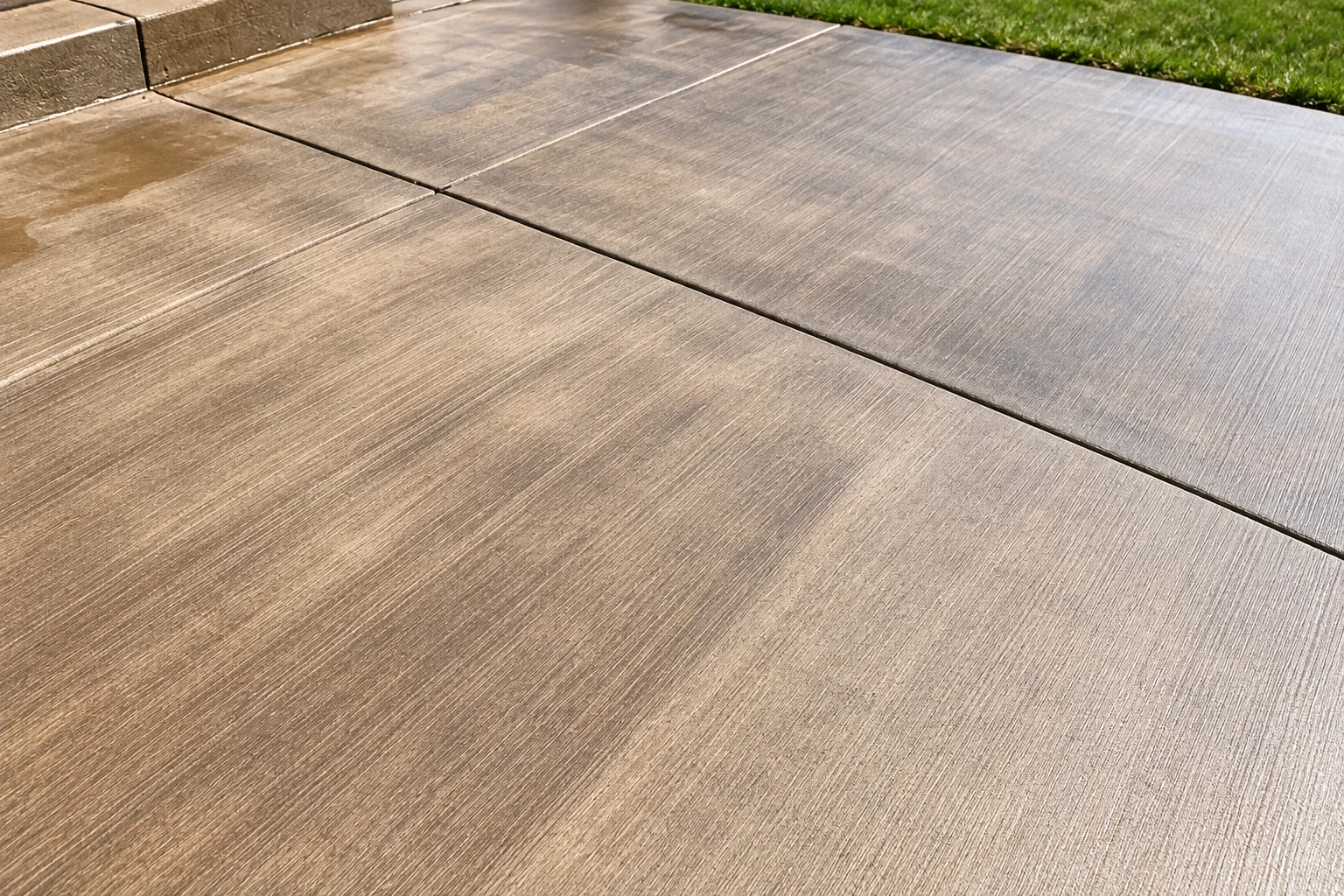
Close view of a gray-brown concrete driveway with a fine linear finish and straight expansion joints.

What does it take to raise a house in Gilroy?

Foundation raising in Gilroy means lifting your house and setting it on new, higher support, such as foundation walls, piers, posts or piles, built to carry the whole house and tied properly into the floor above.

Most people call because they want the house higher off the ground, and the first thing they ask is what it'll cost. The biggest factor is what your house sits on now. After that comes its size, then the work that comes with the lift, like the utility hookups, the new support and putting the yard back. We're based in Gilroy and take work in many of the cities around it.

The schedule depends mostly on the work around the lift. The utility disconnects have to be lined up, and the new concrete needs time to cure, which is the wait while it hardens enough to carry the house. Your own price comes from the line-by-line estimate I write after I've measured the house and looked at what's under it.

What happens when you call about raising your house in Gilroy?

  1. Call or send the form

    Call (408) 427-8265 or send the form with your address and what your house sits on now. We'll set a time for me to come out and see it.

  2. I measure and look underneath

    I come out myself, measure the house and look at what's under and around it, from the crawlspace to the trees and the driveway. The estimate is written line by line, so you can see what's in it and what isn't before you decide anything.

  3. We settle the plan together

    Before any concrete goes in, we go over the layout of the new support with you, including how water will drain away from the house. I'd rather answer questions on paper at this stage than fix them after the truck shows up.

  4. Our crew builds and cures

    Our own crew works to the plan we agreed on, and I'm on site for the layout and the pour. We cure and protect the new concrete before we hand it over, because it needs that time to harden before it carries a house.

How we build new support under a Gilroy house

A raise is more than the lift. We start from what your house sits on now and plan the new support around it, whether that's continuous foundation walls or piers and posts. We use rebar, the steel bars inside concrete that hold it together under load, wherever the weight comes down. The new support has to carry the whole house and connect properly to the floor above, so that connection gets as much attention as the concrete.

Around Gilroy we see a lot of clay. Clay soil can swell as it soaks up water from sprinklers or rain, with enough force to lift a building and crack concrete. That's why I look hard at the ground and the drainage before we pick a type of support.

What goes into the new support:

  • Foundation walls or piers
  • Footings with rebar
  • Raised utility hookups
  • Drainage away from the house

When foundation raising beats shoring up what's there

If the house only needs its existing support shored up, one pier maker's guide says helical piles suit repair work. Portable equipment can set them in tight spaces, with no heavy machines near the old foundation and none of the shaking that driven piles cause. When the goal is getting the house higher, though, you're building new support. I'd rather do that properly while the house is up, because once it's back down, what's under it is hard to reach.

What shapes the cost of foundation raising

Apart from the house itself, the price moves with the kind of support, how easily equipment can reach the house and how much has to be put back afterward. Walls cost differently than piers, and a tight lot means more handwork. If a walk or patio sits where a pier has to go, we may need some concrete cutting first. That goes on its own line, so you can see what it adds.

Straight answers from Premium Gilroy Concrete

I started this business in Gilroy in 2017 after years of commercial slabs, footings and paving. That work taught me that the parts you can't see later decide how concrete holds up. On a raise, those parts are the support, the reinforcement and the drainage, so that's where I spend my time, and the estimate shows you exactly what you're paying for.

Before we start, I'll tell you plainly which parts of the yard the equipment will cross and what it may do to them. If your driveway is the way in and it comes out the worse for it, we can pour a new one as part of our concrete driveway building work.

Get your house raise planned on paper

Call (408) 427-8265 with your address and what the house sits on, and I'll come out and measure it myself.

Get a free, line-by-line estimate for raising your house

Add your address, what the house sits on and any soil notes from your disclosures. We reply within one business day to set up a free on-site estimate, no pressure to book.

(408) 427-8265

Questions about raising a house in Gilroy

How much does it cost to raise a house in Gilroy?

Across the US, raising a house with a 1,200 sq ft footprint above flood level usually costs about $75,000 to $135,000 per job. That's the going range nationally, not our price. Your own figure comes from the estimate after I've measured the house and looked at what it sits on.

What is the best way to tell if my house is easy to lift?

Look at what's under it, because a house on piers and beams with a crawlspace is usually the easiest kind to lift. That usually means less labor and a lower cost than a house that takes more work to get under. If you're not sure what yours sits on, I can tell you when I come out.

What happens to my utilities when you raise a house?

A licensed plumber and electrician disconnect all of the home's utility hookups before the lift, and the utilities have to be raised along with the house. We line up that work as part of the plan, so it's not a separate surprise at the end.

Will raising my house tear up my yard?

It can, because large equipment, dug-out dirt and moved trees can damage a lawn and landscaping during a lift. It's smart to budget for some landscaping repair after the project, and I'll show you which areas are likely to take the wear before we start.

How do I check my Gilroy lot for soil or earthquake problems before a raise?

Start with your home buyer's disclosures, which can tell you whether the lot has expansive soil, meaning clay that swells when it gets wet. The local building department or a soil engineer or geologist can tell you as well. For earthquake hazards, you can type your address into the state's EQ Zapp map on a computer or phone. The state geological survey also requires site-specific geologic studies for new construction and significant remodels, so builders can plan around known hazards.

Who is licensed to raise a house in California?

The state license board has a building-moving class, C-21, for contractors who raise, lower and move structures and their foundations. That class doesn't cover alterations or repairs to the parts of the house that stay in place. On home improvement jobs, the board also caps the down payment at $1,000 or 10 percent of the contract price, whichever is less. We're licensed and insured, and I'll walk you through who handles which part of your job.

Areas we serve around Gilroy

We're based in Gilroy and work in many cities around it, including Morgan Hill and Hollister. Pick your area below, or call if yours isn't listed.

Call (408) 427-8265