Garage floor concrete in Gilroy CA - a floor that drains and keeps cracks narrow

Cracked, sinking or pooling garage floor? We dig out, pack the base and pour a new sloped slab that drains toward the door.

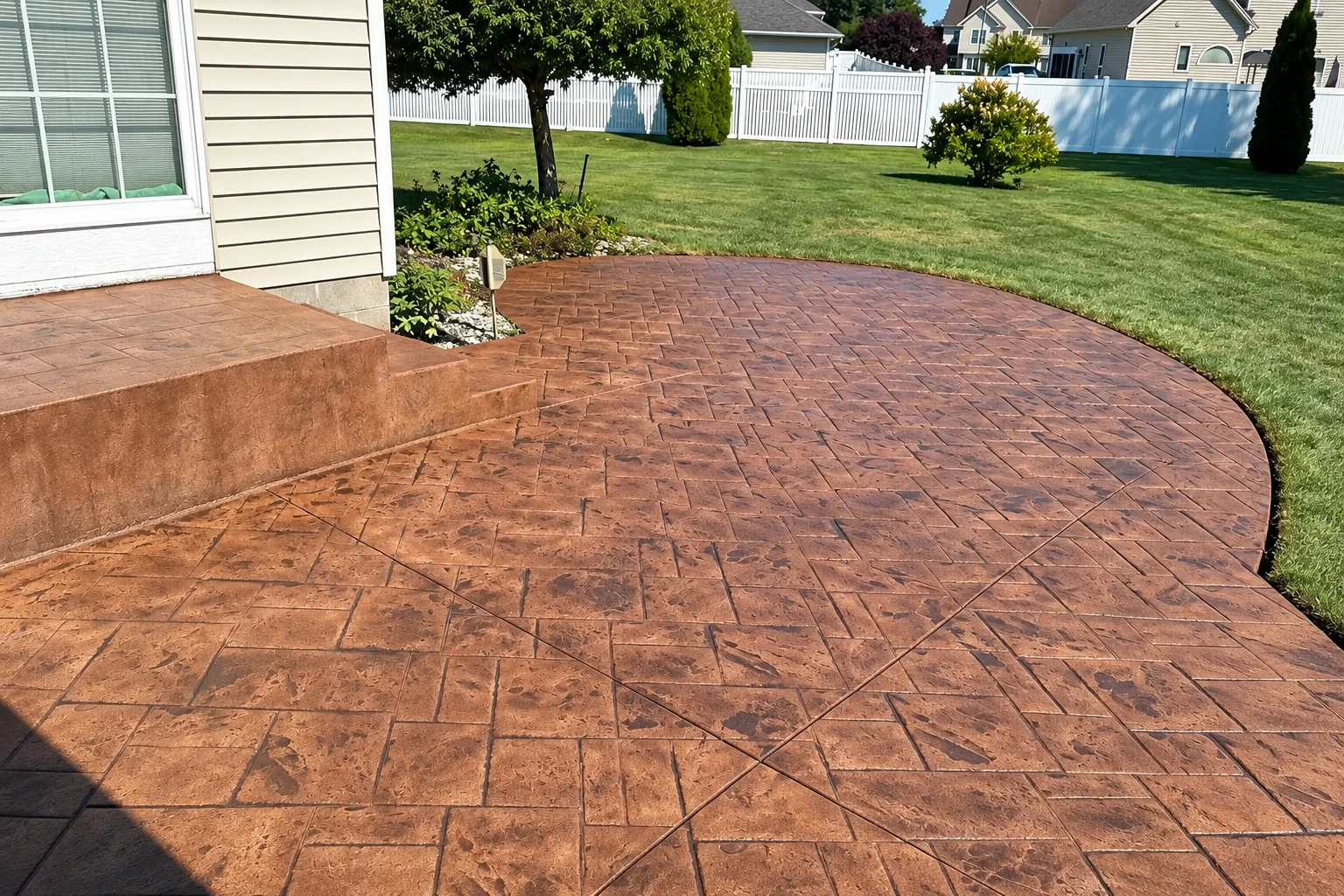
Curved reddish-brown stamped concrete patio with a textured block pattern and steps beside a house.

What goes into a new garage floor in Gilroy?

Garage floor concrete in Gilroy, CA is a new slab poured over a dug-out, compacted base and sloped so water runs out instead of pooling. The curing wait afterward, more than the pour itself, is what keeps your car out of the garage.

Most calls start with a floor that's cracked across the middle, dropped near the door or holding water where the car drips. That's usually the dirt underneath settling rather than bad concrete, so the job starts below the slab. We break out and haul off the old floor, dig down to firm ground, pack the base, set the forms and reinforcement, pour, and then let it cure.

The price mostly follows the garage size, how much old concrete comes out and how much base has to be replaced. The schedule turns on the curing wait more than on pour day. If you want color or a pattern, that's decorative concrete and it's priced on top of the slab. A garage cut into a slope may need a concrete retaining wall behind it first. Your estimate puts every piece on its own line.

What happens when you call about a garage floor in Gilroy?

  1. Send the size and photos

    Call (408) 427-8265 or send the form with the garage size and a few photos of the current floor. We set a time for me to come out and see it.

  2. I measure and look underneath

    I come out myself, measure the garage and check the old slab, the ground under it and where water runs around it. Then I write the estimate line by line, so you can see what's in the price and what isn't.

  3. We agree on the layout

    Before the pour we go over the plan with you, including where the joints go and which way the floor drains. That's when questions get settled, on paper, before the truck is booked.

  4. Pour, cure and hand over

    Our own crew does the work to the plan we agreed on, and I'm on site for the layout and the pour. We cure and protect the new floor before we hand the garage back to you.

What a well-built garage floor in Gilroy takes

The part that matters most sits under the floor. Guidance from the national concrete association says to strip out topsoil and soft spots and compact the base by rolling, vibrating or tamping. We dig the base out and compact it rather than raking the dirt level. We also slope the subgrade, the dirt and fill the slab sits on, so the finished floor drains toward the door and away from the house.

The same guidance puts isolation joints where the floor meets walls and footings, so the slab can move on its own. Those are breaks through the full thickness of the slab. Control joints are shallow grooves cut so the slab cracks along a line we picked, and they go where the layout you've already seen puts them. Curing is keeping the new concrete damp while it hardens so the top doesn't come out weak. The guidance says it should start right away, with a sprayed curing compound or with damp burlap kept wet for at least three days.

What a garage floor job covers:

  • Breaking out the old slab
  • Digging out and compacting the base
  • Reinforcement and control joints
  • Curing and protecting the pour

Patch the garage floor or pour a new one

A few hairline cracks in a floor that's still flat and still drains are usually worth leaving alone or sealing, because some cracking is normal for concrete. It's different when a section has sunk, rocks underfoot or now tips water back toward the house. That means the dirt under it has moved, and a patch on top won't hold the floor up. That's when I'd tell you to replace it, base and all.

What sets the price of a garage floor

Beyond the size, the price moves with how thick the slab is, whether it's reinforced, how close the truck can get and what finish goes on top. That can be a plain broom finish, a light brushed texture that gives tires grip, or something decorative. When the budget gets tight, people want to trim the base work first, because nobody sees it once the floor is poured. I'd cut the finish before the base, since the base decides whether the floor stays flat.

Straight answers before the truck shows up

I learned concrete on slabs and footings for commercial buildings, where the parts nobody sees later decided how a slab held up. I started Premium Gilroy Concrete in 2017 to bring that same care to homes. Before we start, we settle where the truck parks and where the old concrete goes. I'll also tell you in plain words what each line of the estimate pays for. Your satisfaction, guaranteed.

Get your garage floor measured and priced

Call (408) 427-8265 before you pick a pour date, so we can plan the week your car stays out around your schedule.

A line-by-line estimate for your new garage floor

Put in your address, the garage size and what's wrong with the old floor. We reply within one business day to set up a free in-person estimate, with no pressure to book.

(408) 427-8265

Garage floor questions we hear

How much does a garage floor cost around Gilroy?

A concrete slab in the San Jose area usually costs about $7 to $15 per square foot, and that's the going rate in the market, not our price. Garage slabs around San Jose sit at the thicker end of the usual range for home floors, and reinforced slabs cost more per square foot than plain ones. Staining or stamping isn't in that range. My estimate breaks your floor out line by line.

Will my new garage floor crack?

It probably will somewhere, because all concrete tends to crack and nobody can pour one that's crack free. Reinforcement can't stop cracks, but wire mesh or rebar, the steel set inside a slab, keeps them narrower when it sits in the right spot. The control joints described above give cracks a straight line to follow. I'd rather explain that up front than promise you a floor with none.

How long does a new garage floor need to cure before I can park on it?

Plan on about a week, since that's the wait the San Jose slab guide suggests before heavier loads like a car. You can usually walk on the floor within 48 hours. Full curing takes 28 to 30 days, so the floor keeps getting stronger after the car is back, and we pick the pour date with you so you know when to park elsewhere.

Who can legally pour a garage floor in California?

A licensed contractor, or you on your own property. The state lets someone without a license take a small job only up to $1,000, and only when the work needs no permit and that person hires no one. The state licensing board also recognizes owner-builders who improve their own place, either doing the work themselves or with their own employees paid in wages. We're licensed and insured, and our own crew does the pour.

What causes a garage floor to sink or crack?

Usually the base, when the dirt was raked level instead of dug out and packed, so the slab settles as the ground under it does. Joints cut late or left out let cracks run wherever they like. A pour in midday heat can leave a weak, dusty top that wears fast.

How do I compare bids for a new garage floor?

Compare how each crew plans to limit cracking, not who promises a floor with none. Ask how they'll prepare the base, which way the floor will slope and how the joints will divide it into panels, since industry guidance says those panels should be square. We lay ours out so the panels come out close to square, and our estimate spells out all three.

Gilroy and the cities around it

We're based in Gilroy and pour garage floors in San Martin, Morgan Hill and many other cities nearby. Pick your area below, or call if yours isn't listed.

Call (408) 427-8265